It’s common to jump on a website and immediately see a pop-up regarding accepting cookies, and can even be mandatory if you wish to continue to the site. But have you ever truly understood what exactly you’re accepting? Cookies and privacy terms can vary website to website, but here’s what you should know before you make the click.
What Are Cookies?
Cookies allow websites to remember and store information when you use their site. This information can include your name, your login, your purchase history, and more. Depending on what site you visit, it may or may not be wise to accept cookies. Some sites enforce the use of cookies to produce a better experience for the user. This can include personalizing the site based on your preferences and to save your desired items for later. Some cookies are placed by advertisers, which is considered a third party to the site. In this instance, you may want to install safety software to prevent private information from being stolen. The privacy terms you are accepting are there to let you know that the site is transparent about data tracking. So if this concerns you, be sure to read over the conditions before allowing cookie usage.
When To Say No
While most websites use cookies to create a better experience, there are plenty of reasons to be cautious. If you notice a website is not encrypted, it means there is very little protection for your information. If you are able to catch that the cookie agreement is for third parties, refrain from accepting them. This can allow your data to be stolen, sold, and more vulnerable to hackers. Finally, if you are entering in personal or banking information, do not allow cookies to be used. It is always better to be safe than sorry when it comes to your data.
It can be hard to differentiate between a trustworthy or an untrustworthy site, so always pay attention to what terms you accept. If you have any questions about our IT services, contact us today! Follow us on Facebook to keep up with our latest blogs!
While in office, cyber safety should always remain a huge priority. With the summer months quickly approaching, more people will clock out of the office for a vacation. Though you won’t be working for the time being, it doesn’t mean that you should take a vacation from protecting your sensitive data. Here are some ways to maintain strong cyber security when on vacation.
Beware Of Free Wi-Fi
You might think you’re not at risk while away from the desk, but this is not the case. If you decide to bring along a work laptop or work phone, pay attention to a few helpful tips to avoid a cyber attack. Starting off, make sure to not use free Wi-Fi. Having the option to connect to free Wi-Fi can seem great, but it can also expose your devices and any personal information that resides within them. A good way to avoid hackers accessing your data is to use a strong VPN or use your phone as a hotspot. Sometimes our devices connect automatically, so be sure to disable this feature before traveling.
Keep Track Of Your Devices
It is important to never leave your devices unattended for a number of reasons, but especially if your device holds important data. Make sure to keep track of items such as USB drives or tablets, even if it’s your toddler’s ipad. Any device you own will possess some kind of valuable information such as saved passwords and banking information. This is what hackers are looking for and will not hesitate to steal your devices if they are not held closely.
Refrain From Using Community Computers
Depending on your trip and where you plan to stay, refrain from using shared computers of any kind. Some hotels or vacation rentals will provide computers for guest’s use, but should never be trusted for remote assignments. Purchases, checking emails, or social media can also lead to cyberthreats if not careful. To protect you or your company, it is best to work on your own personal computer to avoid risk.
People go on vacation to enjoy time away from the office and with their families, so be prepared before clocking out. If you have any questions about our IT services, contact us today! Follow us on Facebook to keep up with our latest blogs!
Passwords are used to protect your devices, finances, health records, and so much more. We rely on them to prevent unauthorized users from accessing devices and accounts, which is crucial for most companies. Passwords are meant to change frequently to properly fulfill their purpose, as no password is unbreakable. Alas, World Password Day was born to act as a reminder to everyone that maintenance is required to retain account security.
Why It’s Celebrated
It is imperative that everyone has a strong password to ensure privacy. Before the internet and all of its glory, passwords were used as a method of entry for secret societies and clubs. Today, passwords are used a little less loosely to avoid cyber hacking. As the world becomes more advanced, cyber threats evolve as well. This means it is crucial to maintain the security of your passwords by updating them regularly. Falling on the first Thursday of May every year, World Password Day serves to encourage users to protect their data by maintaining their authentication methods.
Password Mistakes
Many people see their passwords as a way to get into their accounts rather than a way to keep others out. With this, many people try to make their passwords short, easy to remember, and personally relatable. Hackers are well aware of this, and will likely guess a password based on this criteria. Users have a habit of using the name of a pet, child, hobby, or profession when creating a password. A way to make passwords more difficult to guess is to use one that is irrelevant to the user. People also commonly use the same passwords across different platforms. This makes it easier for a hacker to access all accounts with one successful attempt.
With data being as precious as it is, it is up to you as the user to pay mind to your level of security. Celebrate this World Password Day by updating all your passwords for any account that holds value.
In today’s world, everyone relies heavily on technology to do just about anything. We use it to communicate with one another, to work and pay our bills, and purchase goods at the click of a button. We expect our devices to work without error, and can often forget that electronics can fail us at any point without any warning. It is important to remember that computers, phones, and other devices are not to be depended on for everything, and lost information can sometimes be the fault of the user.
The Situation
Imagine walking into work one morning to find a great mechanical failure has occurred overnight. This could have been caused by a number of events such as a virus, a natural disaster, a human error, or a system failure that has erased all of your company data. Nevertheless, the recovery system you had failed and your business could be facing serious risks. This disaster can happen at any moment, which is why it is crucial to install a more trustworthy IT recovery system to ensure proper data backup.
Prevention
The best steps to take to make sure your plan is safe is to manually back up data and information regardless of the trust you have for your recovery system. It is also wise to perform a full system restore once a month to make sure that the recovery system you have actually works. The single most expensive mistake most small business owners make is related to protecting their company data, so it is better to be safe than sorry. All businesses should document their IT recovery plan as part of their business continuity plan, and should not neglect testing it periodically.
Conclusion
It can be easy to forget that electronic devices are not without their flaws, and can fail you and your business any day of the week. In order to retain all those irreplaceable files, make sure your recovery plan has your back. If you have any questions about our IT services, contact us today!
USB flash drives have been a practical and reliable way to transport valuable files to and from different computers. Since the year of 2000, they have been a viable trinket to businesses and students when needing to back up data. Over the years, their storage capacity has reached a whooping 512GB, when it only started at 8 MB. For something so small to become so powerful is a huge deal, which is how it came to getting its own national holiday.
Benefits of the Flash Drive
In respect to the flash drive’s infamous reputation, let start by noting reasons why they come in handy when storing data. A flash drive is very simple to use, and can be easily stowed away because of its size and weight. It is a relatively fast way to transfer files over to different devices, as well as having plenty of storage options. While all these things make the flash drive great, security should remain the biggest concern and priority.
Is it Secure?
Flash drives can be secure if they have advanced enough features. Some are equipped with a passcode, preventing users from accessing private material if your flash drive becomes lost or stolen. The problem is that hackers utilize this nifty object to help invade your personal information to spread attacks. It’s important to be aware of what you insert into your computer, considering that a flash drive is capable of carrying dangerous malware. This kind of threat can rupture your IT infrastructure, creating various amounts of issues. These threats can be so serious that in certain situations, the damage is irreversible. Plugging a drive into the USB port can record and gather the information it needs. This information could include access passcodes, sensitive data, and business owned files. Attackers can also use flash drives to maliciously damage your PC all together, completely destroying anything it’s electronically attached to.
Conclusion
While it may seem far-fetched to assume something as tiny as a flash drive can wreak all this havoc, you must consider the importance of your or your business’s data to ensure proper security. Backing up digital data can be simple and secure with the right form of integrated security. If you have any questions about our IT services, contact us today!
Follow us on Facebook to keep up with our latest blogs!
Something as simple as sending an email may seem like normal task, but every email sent out holds precious information that thieves prey upon. Whether it’s for personal or company use, any information can be utilized to expose any confidential details you may not wish to share. These details can be used to perform cyberattacks, which is more than ideal to avoid. With the use of email security, your or your company’s cloud can be protected from potential cyber threats.
Why is it Important?
Having cloud-based email security is important for a number of reasons, especially since email is the most vulnerable line of communication. This is because hundreds of emails go out each day depending on the size of your company, raising the overall probability of getting attacked. Since most employees are busy working, the chances of them noticing a suspicious link attached to an email may be slim. Clicking on this link could result in attackers collecting precious credentials or installing viruses to employee computers. To prevent this from happening takes a lot less exertion than trying to reverse it, so consider taking action before it’s too late.
Potential Threats
Companies and personal users of email face potential consequences everyday when without cybersecurity. But what types of threats are there to look out for? Phishing emails take a hefty 90% of the blame for attacks for their talent of deception. These emails are sent to employees and usually consist of believable scenarios such as:
Changing payment methods for certain services (Netflix, Amazon, ect.)
Changing a password for an account under their name or company’s name
Alarming notices regarding unwarranted purchases
There are other ways for phishing emails to trick your employees, and they continue to evolve every single day. Phishing emails are the starting point of cloud-email exploitation, which happens through the use of document sharing. Many companies rely on Google Drive and other document sharing tools, so a recognizable email may not strike anyone as suspicious. Without proper cybersecurity, attackers can access these private documents and other data found in the cloud.
How Can I Improve it?
Applying integrated security to protect company data is the best way to prevent cyber attacks. Email encryption prevents data leaks wherever there is vulnerability in the server. Adding this extra step to ensure security between emails will definitely help. It is also beneficial to educate employees of these scams and how to identify them before moving forward. Thieves become more intelligent with every passing day, so learning how to specify what to avoid will benefit you or your business greatly.
Conclusion
As a company, it is a great responsibility to make sure your data is protected. As it’s been said before, prevention is a lot easier than finding a cure. Preparing for the worst scenario and staying aware of cyber threats will save you a lot of time and concern.
To learn more about our services, contact us today!
Follow us on Facebook or to keep up with our latest blogs!
Ransomware is a type of malware (malicious software) that takes your files, data or computer hostage until you pay money. When a ransomware attack happens, your computer or browser may lock up and you may see a ransomware note or your files will be encrypted, leaving you not being able to access them.
How does your computer get it?
There are a few ways ransomware and other types of malware can infect your computer.
Opening links on emails from unknown sources
If you get an email from an unknown email address with a link attached, it’s better not to open it. It could be disguised as a coworker or trusted company. If something about the email seems off, check to see if there are typos in the name or email address. This can be an indicator that the email is fake. These types of emails are called phishing.
Opening links or websites from social media messages
Like the messages that come to your email with a malware virus in them, these are often sent by people you don’t recognize or fake accounts. If a link looks suspicious, do not open it, even if it is from a family member or friend. Their accounts could have been hacked. It is better to check with them to make sure the file is safe.
Using unsecure sites
Sites have their own protection on them. If this has been breached or it is a site set up for malicious purposes, it could put your data and computer at risk. Your browser will usually give you a warning before entering the site. If this happens, it is best to back out of the site.
Steps to protecting your computer against ransomware
– Making sure your computer and software is up to date
– Check emails addresses and look for signs that a website could be fake before downloading anything
– Backup your files and data
The number one way to make sure your data is secure and protected is by having a good backup system in place. If a ransomware attack does happen, you don’t want to pay the money to get your files back, because there is no guarantee that you will get the data back. When you have a good backup system in place, you know that even if something does happen, your data is secure and can be redownloaded onto your computer.
If you need help setting up a backup system for your company, contact us and one of our WesTec reps can go over the options and help you decide what is best for your company. Don’t forget to follow us on Facebook!
Think of how much of your company’s work is done on a computer and all of the programs, files and information that is stored. If your company does not have a data backup system, you’re at risk of losing it all. That could be detrimental to your business.
So what could cause your systems to go down and experience data loss? There are a few different scenarios where your company could be at risk.
Hardware, Software or System Malfunctions
If you work on a computer, you know they’re not always perfect. Sometimes systems fail or malfunction. If this happens and your data is not backed up, you lose all of your files. If you had a data backup system in place, you could simply load up the backup and restore your information that was lost.
Human error
We’ve all made the mistake of accidentally deleting something we weren’t supposed to. It could be that an employee thought the file was something else or accidentally clicked the delete button. Without data backup, those files would be lost forever and the work would have to be redone. With backups, you’ll be able to restore the file and continue the workday.
Malware or Ransomware
Malicious Software, malware for short, is what people refer to as computer viruses. There are different types of malware, with some having the ability to delete everything on your computer system. Ransomware is a type of virus that holds your data captive unless you pay a dollar amount. If you have a good backup system in place, you won’t have to pay the ransom and you will still have access to your data.
Natural disasters
In Houston, there are many things that could happen, in particular, flooding. If your computer and hard drive were to be destroyed in a flood or fire, you could lose your data.
While many things could happen, the risk associated with losing your data and files can be mitigated by properly backing up your data. There are different types of backups and data protection. If you would like to start protecting your company’s data, contact us and one of our WesTec reps can go over the options and help you decide what is best for your company. Don’t forget to follow us on Facebook!
If you own a business, protecting it is probably on the top of your priority list. Surveillance systems and cameras can help you do just that. When making the decisions about CCTV or IP cameras, there are a few different factors to consider before mounting them.
Purpose
The first thing you want to identify when deciding on the location(s) of your security cameras is, what are you trying to protect? Is it one building? All the doors to the office? Outdoor equipment? Employee workspaces? Thinking about these questions will help you narrow down exactly where you need cameras and what type. The whole purpose of a security camera is to protect your business from numerous different threats. Making sure you are capturing the correct areas is the first step.
Power Source
Cameras need a power source to operate. Is there access to a power connection or can new wiring be installed in the areas you are wanting to place the cameras, or do you want to go with a battery powered or solar panel option.
Mounting
Thinking about the places you are installing the cameras and the material that the surveillance cameras will be mounted to. There are many different brackets and methods for mounting security cameras. Our professionals can help you decide what would work best for your needs.
Environment
There are many all-weather or weather resistant cameras. Thinking about what kind of environment your security system will need to operate in will help you decide the location and what type of camera you will need.
Lighting
Are there lights in the area you want to cover? Is it natural or artificial lights? At night is the space well lit or will you need a camera with night vision?
There are many factors that go into deciding the location of your security cameras and the type of system that would be best for your business. Surveillance cameras help protect your company from a range of hazards from theft and crime to workplace accidents. WesTec Services can help make sure you are getting the most out of your surveillance system and assist with answering those questions about camera placement.
Contact us today if you have any questions about adding a surveillance system to your business or learn more about installing a WesTec Guardian CCTV/ Video Surveillance System here.
WesTec offers a full line of Houston cabling services including Voice, Data, Fiber, and Coaxial cabling. In this article, we will take you through the specifications of each one, and what makes each of them different.
Voice and Data Cabling
Voice and data cabling are used for just that – voice and data. They are inclusive but not limited to phone system cabling, data network cabling, server room cabling, surveillance cameras, video cabling, and more. Distinctly, data cabling is inclusive to two different types of cables – copper and fiber. The type of cables used define the standards of the method used. Furthermore, these types of cabling make up offices or campus networks, which are able to adapt with new and upcoming technologies; in the long run, allowing businesses to expand.
Fiber Cabling
Fiber cables are able to connect multiple cabinets together and often include a center glass core surrounded by layers of protective materials. This type of cabling avoids electrical obstruction by transmitting light, making them the perfect method for environments with vast amounts of electrical interference. Fiber cabling is now the standard for connective networks across buildings due to their resistance of moisture and lightning.
Coaxial Cabling
Coaxial cables are probably one of the most complex types of cabling to install due to their complex infrastructure. These cables have a single copper conductor at the center, a braided metal shield, and a plastic layer in the center which provides insulation. The metal shield is used to block outside interference from motors, fluorescent lights, and other computers. Additionally, coaxial cabling is resistant to obstruction and can handle larger cable lengths between network devices.
Cabling services differ according to your needs, and many beyond just these four exist. WesTec Services is ready to assist you with your cabling needs. For additional information, questions, or comments, contact us or read here.
For a business or home to run successfully, strong network connection in computers is essential. WesTec offers computer Network Health Checks, but what does that entail?
If your computer(s) are running slower than usual, your network is glitching, or there have been security breaches, you might be due for a Network Health Check.
What Are Network Health Checks?
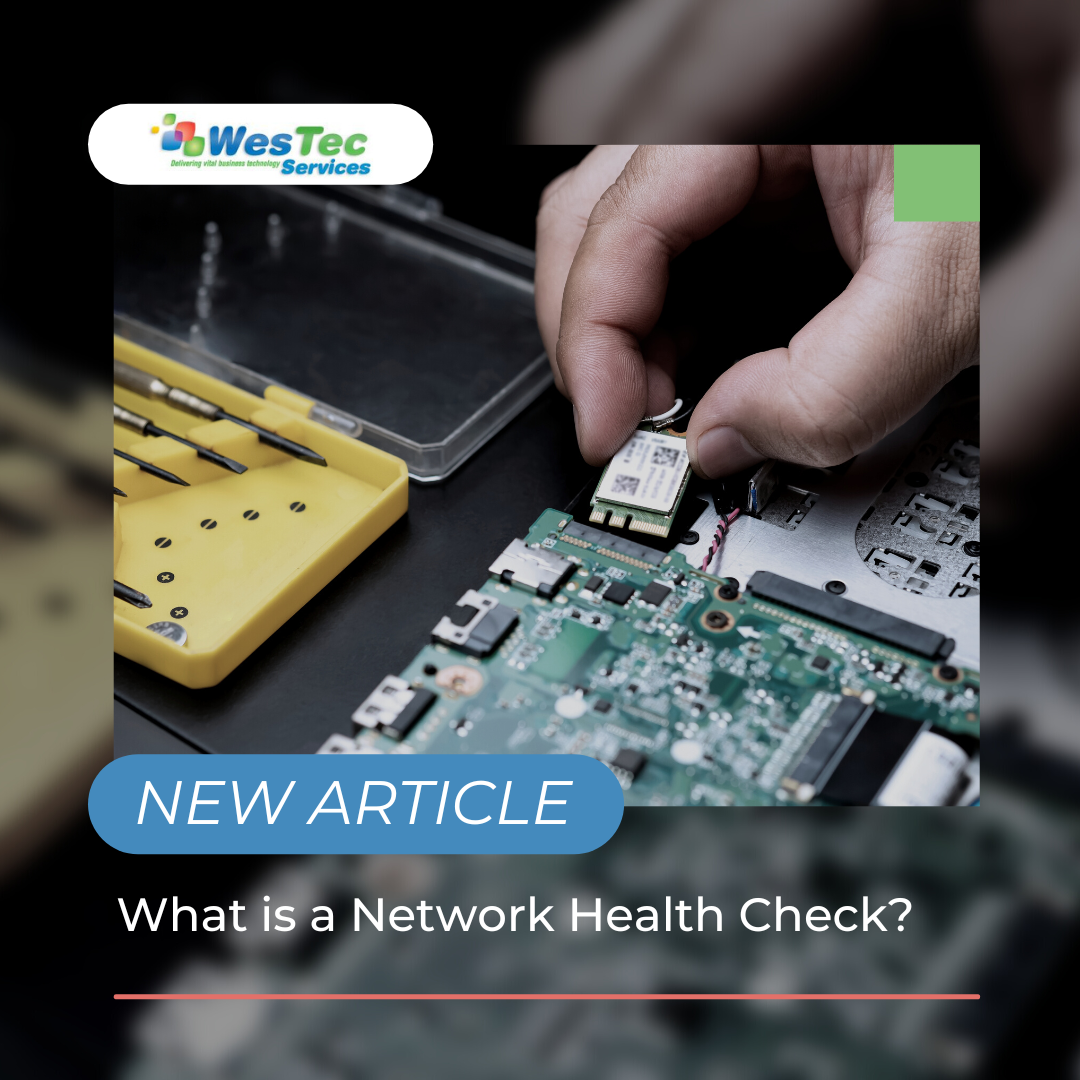
Network Health Check can be defined as a way to test the critical components of a network for performance, reliability, and other security issues. These checks provide security which ensure that your network is sustained to best practices and maximize availability. Because networks can be at risk of security breaches, and malfunction, checking your network health should be done at least once a quarter; some even request that checks are done with more frequency to prevent data loss, poor performance, and others.
Where We Come In
At WesTec, we come to you, on site, and complete a Health Check Audit and check for maximum speed, security, and performance. During the audit, we would also check for any problems such as spyware, failing hard drives, or out-of-date security patches. In addition, we check your computer’s network security, backups, and other issues which could lead to expensive repair bills. At the end of the audit, a report will be provided to you with all information regarding the vulnerability of your network as well as what can be done to fix it.
Now that you have a detailed definition and explanation of a Network Health Check, you might find yourself in need of one. We work diligently to make sure that your network is safe, strong, and reliable. Network Health Audits are only one of the many services we offer. Click here for our services or for any additional questions or requests, contact us. We are more than happy to help!
Now, more than ever, we have to be cautious of our personal documents – whether professional or personal. Information can be easily leaked, lost, or hacked. Follow this step-by-step guide to safely store confidential data:
Disk Encryption
First, enable full disk encryption. This protects all confidential data if its devices fall into the wrong hands. There is software that does the job for you on Microsoft and Apple devices. It is important to note that said software should not be turned off or deleted once applied – this will assure that data stays safe.
Secure Hard Disks and Flash Drives
Second, important data can be stolen through physical media such as external hard disks or flash drives rather than digitally. Said devices should never be taken out of the place of business or left unattended. In addition, there should always be a backup to your backup, which is where encryption comes into play.
Password-Protected Archives
Third, any data that has not been previously stored/encrypted should never be transferred over the internet. Sending important data over programs such as e-mail or file sharing services is sometimes required, but never ideal; however, the easiest way to avoid data theft is to encrypt the data and put it in a password-protected archive. Passwords for the archive should be set through a different channel.
Safely Delete Old Data
Fourth, companies sometimes hoard information that they no longer need. Most times, said information has classified or important data that should not be possessed by the wrong person. The best way to keep the information safe is by getting rid of it once it is of no use to the company. Additionally, never forget to also delete it from the Recycle bin as well; for anything sensitive, use a file-shredder to prevent recovery.
Secure Passwords
Lastly, any archives or passwords created for data storage should be safely secured. Losing and leaking passwords is not a difficult task. The easiest way to keep passwords secure is through programs such as Kasperski.
To Store Confidential Data is simple, when the right steps are followed. Practice the above, and your data will be protected for years to come. For any additional questions or requests, contact us!
Phone technology is constantly evolving. Although new tech toys are fun and functional, there are always underlying dangers. Here are 5 smartphone security risks and how to prevent them.
Risks:
Unintentional Disclosure of Data
Malicious disclosure of sensitive or private information.
Phishing Attacks
Scams made by actors pretending to be a trusted source or individual.
Spyware Attacks
Type of malicious malware or software downloaded without the consent or knowledge of a victim.
Diallware Attacks
Stealing money from a designated user through malware that uses hidden message service or numbers.
Network Congestion
Network is overloaded with links and malware, causing lots of traffic.
Preventions:
Encrypt Mobile Devices
Encrypting is the process of converting information into secret codes which prohibits unknown users from accessing.
Update All Apps and Operating Systems
Updating apps and operation systems with frequency lowers the chances of your information being compromised – sometimes through improved bug fixes.
Set Strong Passwords
Strong passwords often include:
A minimum of 8 characters
At least one capitalized letter
The use of special characters such as, @!#
At least one numeric character
Consider Deactivating Smartphone Functionalities Such as Siri, Cortana, and Others
Smartphone functions such as Siri and Cortana save all data for future use. Make sure that if these functions are being utilized, no private information is shared — or do not use them at all.
Don’t Ignore Error Messages About The Validity of Certificates
A variety of websites do a proper job of calling out accounts or messages that are unsafe. Always read any error messages for certificates or accounts.
Remember: There are thousands of other smartphone security risks, but if you take the proper precautions the chances of any data leakage are slim.
Have any more concerns about smartphone technology? WesTec Services can help! Contact us with any questions you may have and follow us on Facebook, LinkedIn, and Twitter.
Today’s technology is constantly changing and evolving, oftentimes leaving our vital personal information at risk of being sold, leaked or taken. But did you know that there are certain laws in place to protect your data? Here is everything you need to know about data privacy laws in the US:
US Privacy Act of 1974
The US Privacy Act was passed by congress in 1974. The main purpose of this act is to protect the privacy of individuals and prevent unwanted invasions of their privacy or data from federal companies. This includes the closure of personal information. Some key points of this act include:
All citizens have the right to any data held by the government
Citizens can correct or change any data
Sharing information between different federal corporations is prohibited
FTC Act
The FTC or the Federal Trade Commission Act is another important privacy act in the US. It was first introduced in 1914 and is used to enforce the protection of data and privacy of individuals. This act is also used in court to investigate data violations. Similar to other data privacy laws, the FTC focuses on the use of equality and prevents deceptive acts that may affect commerce.
HIPAA
Personal medical information is one of the most vital pieces of data that is protected. HIPAA, or Health Insurance Portability and Accountability Act protects all forms of medical information. This act sets limits and uses disclosures in order to get medical information private and secure.
FCRA
Credit scores and anything pertaining to credit card agencies are protected under The Fair Credit Reporting Act. This act’s purpose is to establish fair, equal and private information that credit card agencies might have. This also prevents certain companies from selling your information to other companies.
Having all your information online can be scary, but just know that there are laws in place to protect you and your information.
Technology can be confusing, and it’s important to know your rights! Have any further questions on internet privacy? Contact WesTec today! And don’t forget to follow us on Facebook, Twitter and LinkedIn.
Data loss can happen to anyone or any business. It can be frustrating, especially when you aren’t aware of why or how it happened. Most data loss happens when you least expect it. It is important to know when your data is at risk of being lost. Here are the most common causes of data loss:
Human Error
We all make mistakes one way or another. When data is lost, most of the time it is due to accidentally deleting information or not backing it up. When this happens, some information can be restored through recycle bins or the internal software file. This is frustrating, but can easily be solved by setting up an automatic backup system.
Viruses
Viruses are very common, and are often the culprit of data loss. These pesky viruses can enter your system through unsafe links or downloads. Once they get into your system, they can delete any and all of your information. In order to prevent viruses, there are many guard softwares that will protect your devices. Depending on which guard software you have, it will need to be updated regularly to conduct scans and security checks. Without guard software, you can protect your information by paying close attention to certain emails or downloads that may be sent or presented to you.
Power Outages
Power outages can happen anytime, and most outages cause data loss. Similar to human error, it can be prevented by constantly saving your information and backing it up. The trickiest part is that you don’t know when a power outage will happen, so it is important to regularly save your data. However, most of the time when a power outage happens, most systems will automatically save, but you should also take precautions in your own hands.
Hackers
Recently, hackers are becoming more common when it comes to data loss. Hackers usually enter your system due to poor quality servers, weak firewalls, or using common passwords. There are many ways to prevent hackers such as strong passwords, safe web searches and guard softwares. Unfortunately, information that is stolen from a hacker cannot be restored, which is why it is important to have effective cybersecurity measures.
Have any questions about the right technology services for you or your business? WesTec services can help.Contactus with any questions you may have and follow us on Facebook, LinkedInandTwitter.
Are you interested in creating your own startup? Are you afraid of any cyber risks? Any business, especially startups, are at risk for cyber attacks. These attacks can be detrimental to a business or online presence. It is vital to know what these attackers are looking for and how to protect yourself. Here are some tips to secure you and your startup from cyber attacks:
Account Admin
Depending on how big your startup is and how many accounts will be online, it is a good idea to have one admin account. This means the one admin account will have the authority to grant access to fellow accounts and ability to download data and software. This will cut back on online vulnerability as only one person will have access to important data. Along with an admin account, you can also unlock certain data and access to different accounts within the startup. For example, you can grant access to the financial department of bank account statements and billing information. Not only will this limit the risk of cyber threats, it will also cut back on time that the admin would have to grant access every time.
Strong Passwords
Having strong passwords isn’t a surprise when it comes to cybersecurity. But, the top way hackers get into systems is going through weak passwords. In order to stop this, it is recommended that every password should have a capital letter, special characters and numbers. It is also important to never share passwords.
Multi-Factor Authentication
No matter how strong passwords can be, hackers can still find a way in. Thankfully, more systems are requiring a multi-factor authentication process when logging into an account. This means that even if someone has your password, it can require a phone number or email to fully login. Most online softwares offer this level of security, you just have to authorize it.
Knowing how to protect you and your startup from cyber attacks is crucial. With selecting admin accounts, strong passwords and multi-factor authentication process, hackers will have a harder time logging into your accounts.
Cyber threats can be irritating and hard to effectively prevent them. WesTec services can help you in any way. We offer skilled expertise in all technologies and are ready to help. Contact us for any further information on phishing and how to protect yourself.
Cloud computing is one the most beneficial ways for businesses to operate, but still creates online threats. Many threats can appear, but Shadow IT can interfere with devices, technology systems, applications and software. Learn about the dangers of Shadow IT and why is it being used:
What is it?
Shadow IT can be described as projects or networks that are managed by outside providers, without prior approval from the IT department. With cloud database popularity, shadow IT is growing and creates vulnerabilities including data leaks and database violations.
Risks
Now that you know what shadow IT is, what are the risks? The main risk is data leaks. Oftentimes when shadow IT is being used, it prevents certain backups from being performed. This means important data could be lost forever. From sending a document to a personal email, to file sharing on the cloud, this makes it possible for shadow IT to intervene and allow the information to be compromised by outside networks that cannot be monitored by the IT department.
These risks can go beyond simply leaking information. Depending on the network, shadow IT can harm financials, internal communications and errors within the system. When systems have access to this vital information, they can duplicate it and cause harm to your business and result in losing money.
Not all networks who use shadow IT are purposely doing it to cause harm, and most of the time big companies use this to increase productivity. Companies who use this include Google Drive, Dropbox and Microsoft Office. It is important to know that even though shadow IT can be beneficial, it still makes companies vulnerable to internal harm and should be dealt with.
Prevention
It can be determined that shadow IT will not be going away soon, which is why educating employees on this issue will be the best prevention plan. Along with knowing the risks, routinely checking your data will help manage and determine if shadow IT is affecting your business.
Want to know more about shadow IT? WesTec services can help! Feel free tocontactus and check out ourservicesto see how we can assist you. Don’t forget to follow us on Facebook,LinkedInandTwitterfor updates.
Almost every device has a database system, but do you know how to best manage it? Database management systems ensure that your system performs to its highest potential while creating a more effective way of logging data. Here are the top reasons why you should start a management system for your databases:
Greater Than Human Knowledge
Technology is advancing quicker than ever, and is becoming smarter and more useful in the workplace. We as humans cannot comprehend everything that a computer can do, and without databases, there are lots of limitations. That is why having this management system is so important, it can solve problems faster than we can and can store loads of crucial information.
Automation
Automation is used to perform tasks repetitively, on a schedule that can be difficult when doing it one by one. Management systems can pre-order information and create internal schedules that can be customized for and by the user. While information increases, an effective automation system should increase efficiency and productivity to ensure the best organization.
Questions
There are many questions that are asked every second of every day. Most of which are answered due to database management systems. Most systems have an internal spreadsheet of answers that save humans time and energy to go search for them in traditional ways. This is accessible for everyone and is used all the time for us to better manage information.
Overwhelmed
Even with these types of systems, we can easily get overwhelmed by the information. However, the management system allows the user to focus on the core information rather than the complexities of the little things. Users can easily track and manage their data and time based on their database.
Have any questions about the right technology services for you or your business? WesTec services can help.Contactus with any questions you may have and follow us onFacebook, LinkedIn and Twitter.
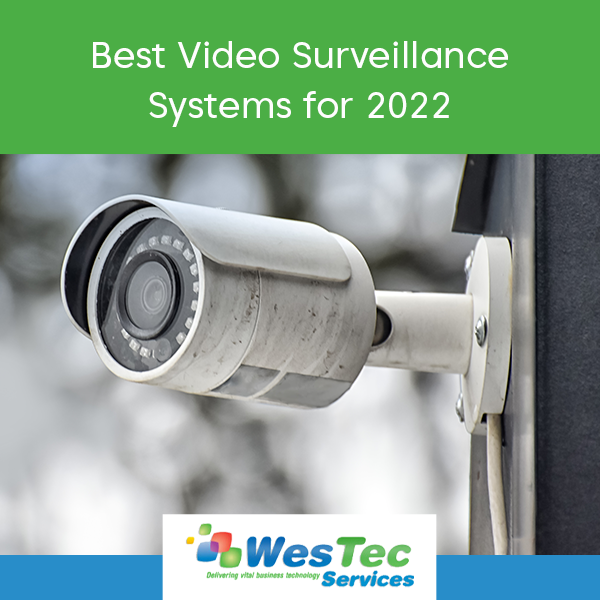
Video surveillance systems are one of the most effective ways for protecting and monitoring a space or business. With loads of surveillance services on the market, it can be hard to choose the best one for you. Here are the top video surveillance systems predicted for 2022.
Protection 1
Ranked the highest, Protection 1 video surveillance company offers a wide variety of services for many companies and areas. Each hardware can be customized to your specific liking. They include 24 hour surveillance that is protected, leaving the most accurate video data. This data can be located through their mobile application. Pricing is dependent on what plan is chosen, but the only downside is that you must sign a three year contact with every plan.
Blink by Amazon
Blink by Amazon is a user-friendly and cost effective option for surveillance. Popular for their no monthly fee or contracts, this device is becoming more popular for everyday users. Like other popular companies, they also work through an app, however it requires wifi in order to work.
Alibi Security
Alibi is a system that is usually paired with an already existing company. This simplys upgrades the performance of the system and is considered a hybrid option. You can pair this with the previous system, IP or analog, without changing the camera itself. It allows you to connect the old device with the new system allowing you to still access the data. For pricing, you must contact an Alibi Security representative.
No matter what surveillance system you decide on, it is important to do research and make sure the system is perfect for you.
Let Westec Services help you decide on and install the best video surveillance system for you or your business. We offer our expertise in all IT issues and are willing to work diligently and professionally for all of our clients. Feel free to contact us and check out the services we offer.
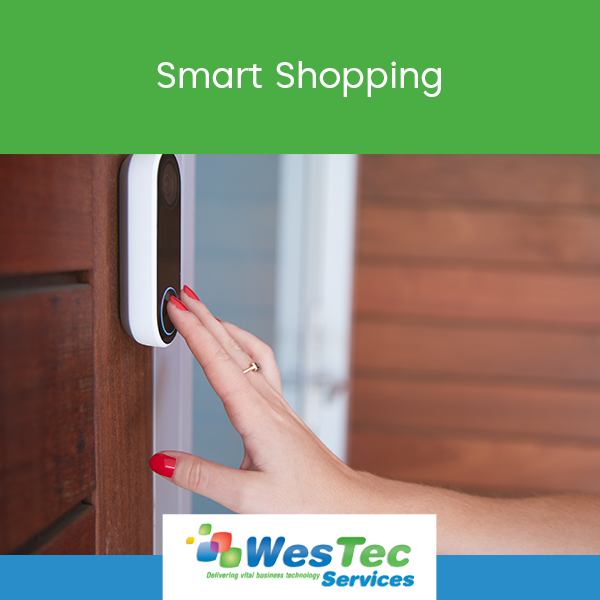
Shopping online has many risks that some shoppers fall victim to. Whether it be personal information stolen, wifi breach or virtual viruses, it is important to know how to become a smart shopper and prevent these risks from becoming a reality. Here are some tips to be a smart shopper:
Know What You’re Buying
Popular smart devices can easily help us and make our lives easier, but it is important to know exactly what you want and what risks might be present. Things to know are:
Who makes it?
What is its purpose?
Do you trust the company?
Have you read the reviews?
All of these things can prevent negative things from happening and make you more aware of what devices you are potentially bringing into your life or home.
Buy Familiar Brands
To limit the risks of buying alone, it is a good idea to buy from familiar or well known brands. These top brands are more likely to have stronger security on devices that hackers will have a hard time getting into and less likely to have any security breaches. Also, top brands are constantly updating their system and creating a safer place for the devices. Rarely hackers get into the system but when they do, these big companies are quick to fix it and will most likely send out a message to customers making them aware of the threat. It is important to be able to trust the brand or company and feel confident is how they handle these risks.
Are you having issues with becoming a smart shopper and protecting your information? Westec services can help! Schedule a callwith one of our professionals today!
Mission: WesTec will be a “turn-key” solution for all of its clients’ business connectivity needs. It will offer efficient and effective solutions, directly and with strategic partners, that create tangible value for its clients at every point of contact. Westec will serve all people and entities with a servant’s heart.
Get in touch
2916 West TC Jester Blvd.,
Suite 104
Houston, TX 77018





 While many things could happen, the risk associated with losing your data and files can be mitigated by properly backing up your data. There are different types of backups and data protection. If you would like to start protecting your company’s data,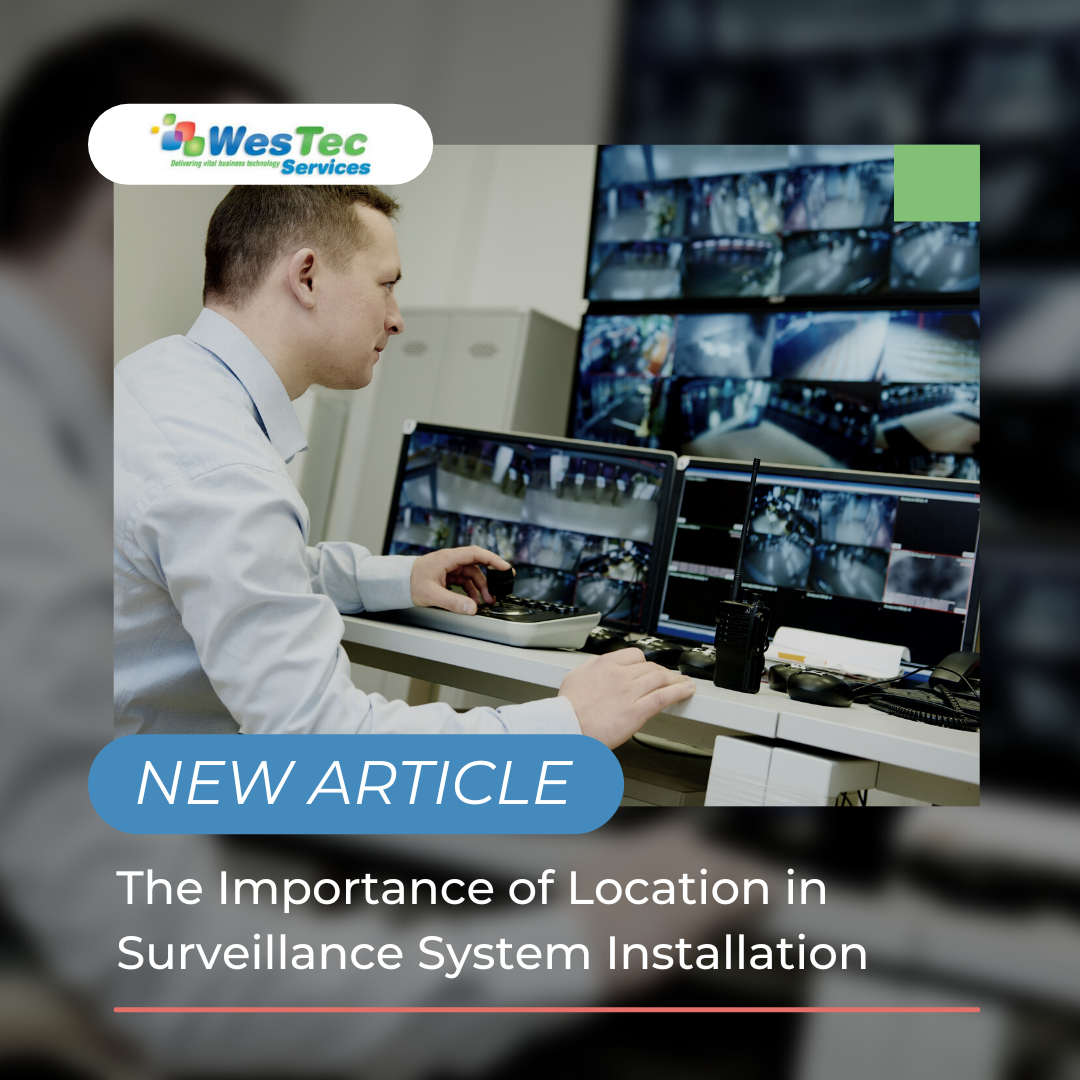
















 2916 West TC Jester Blvd.,
Suite 104
2916 West TC Jester Blvd.,
Suite 104